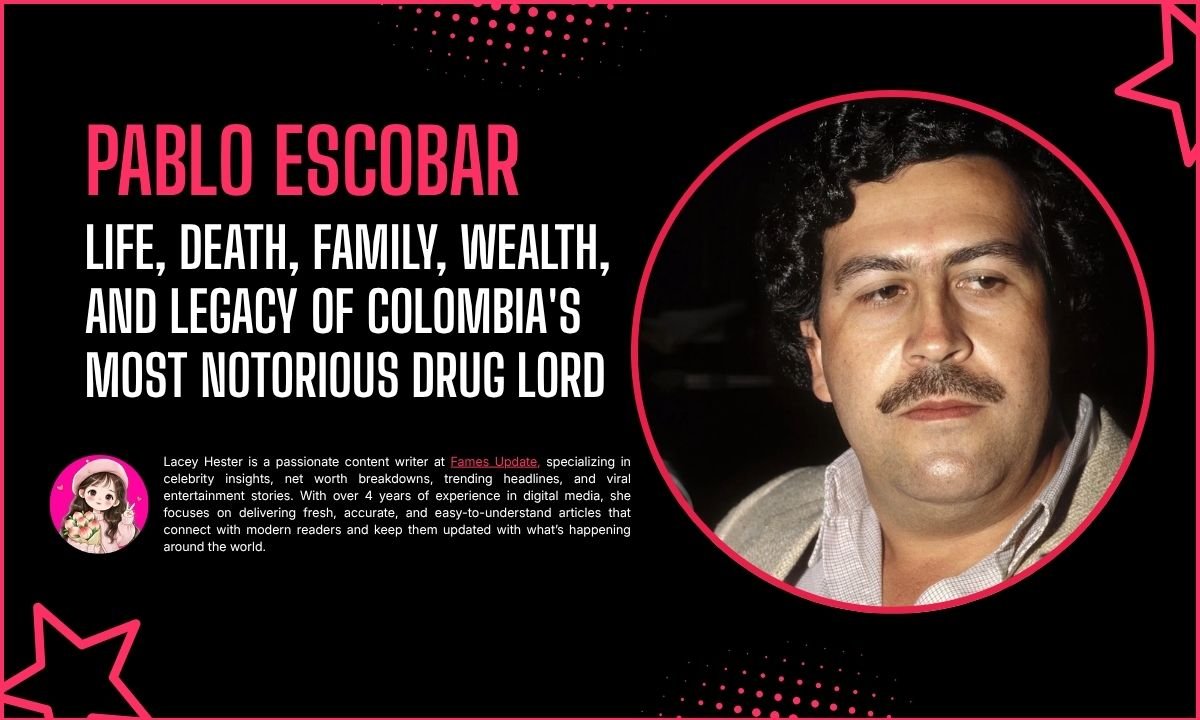
Pablo Escobar is one of the most searched criminal figures in the world, more than three decades after his death. Born in rural Antioquia, Colombia, he turned the Medellín Cartel into a cocaine empire that supplied the United States during the 1980s. Readers still ask who he was, how he died, and what happened to his family.
The questions are varied. Some people want the facts of his death on December 2, 1993, while others search for his wife, his children, his fortune, or the hippos that still roam Colombia’s Magdalena River valley. Popular culture adds another layer, from the Narcos series to the endlessly shared waiting meme.
This article separates documented history from legend. Where a figure is only an estimate, such as his net worth or the number of people killed on his orders, it is labeled that way. Where accounts conflict, as they do on whether he was shot by police or took his own life, both versions are explained.
See More: Christie Mullin
Pablo Escobar at a Glance
Pablo Emilio Escobar Gaviria was a Colombian drug trafficker who led the Medellín Cartel and, for a time, held a seat in Colombia’s Congress. He became a billionaire on paper, a feared enemy of the Colombian state, and a subject of American indictments. He was killed in Medellín the day after his 44th birthday.
The list below gathers the core facts that most readers look for first. Details that are disputed or only estimated are covered in later sections rather than stated here as settled.
- Full name: Pablo Emilio Escobar Gaviria
- Born: December 1, 1949, in Rionegro, Antioquia, Colombia
- Died: December 2, 1993, in Medellín, Colombia, at age 44
- Known for: Leading the Medellín Cartel and the cocaine trade of the 1980s
- Spouse: María Victoria Henao, married in 1976
- Children: Juan Pablo (now known as Sebastián Marroquín) and Manuela
- Age if he were alive today: 76 (he would turn 77 on December 1, 2026)
- Current status: Deceased
Pablo Escobar Early Life and Rise to Power
Childhood in Antioquia
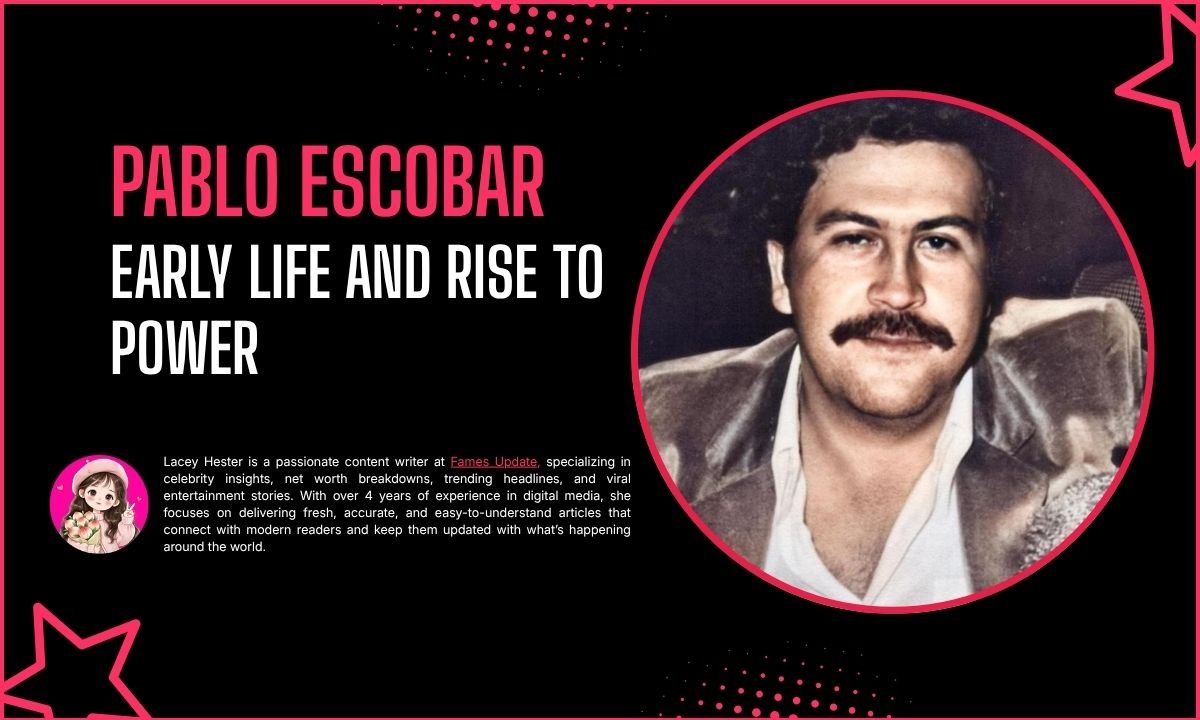
Escobar was born in Rionegro and raised in the Medellín area, the son of a farmer and a schoolteacher. His family was not wealthy, but it was not destitute either. Biographers consistently describe him as ambitious from a young age and uninterested in a modest, conventional life.
Popular accounts say he started with petty crime, including contraband cigarettes, stolen cars, and the resale of tombstones. The tombstone story is repeated so often that it is hard to trace to a primary source, so it is best treated as popular lore rather than established fact.
Building the Medellín Cartel
By the late 1970s, Escobar had moved into cocaine, working closely with his cousin Gustavo Gaviria. Together with partners such as the Ochoa brothers, Carlos Lehder, and Gonzalo Rodríguez Gacha, he helped form the loose alliance that became known as the Medellín Cartel. Its routes ran through the Caribbean into Florida.
By the middle of the 1980s, the cartel was moving staggering volumes of cocaine into the United States. Some popular sources claim it controlled about 80 percent of the global trade, but that is an estimate and not an audited figure. What is not in doubt is that Escobar became the public face of the business.
Politics, Violence, and Surrender
His Brief Political Career
In 1982, Escobar won a seat as an alternate member of Colombia’s Chamber of Representatives. He used the post to build a public image as a benefactor, funding housing and sports fields in Medellín. The image helped him with poor neighborhoods, though it did little to protect him from scrutiny.
In 1983, Justice Minister Rodrigo Lara Bonilla publicly exposed Escobar’s criminal links, and Escobar lost his political standing. Lara Bonilla was assassinated in April 1984, a killing widely attributed to the cartel. The case marked the point at which Escobar’s conflict with the Colombian state turned openly violent.
The War Against the State
Escobar and his allies fought Colombia’s extradition treaty with the United States, using a campaign of bribery and violence. A group calling itself the Extraditables adopted the slogan that it preferred a grave in Colombia to a cell in America. The campaign targeted judges, journalists, police, and politicians.
Among the best known attacks attributed to Escobar’s organization were the 1989 assassination of presidential candidate Luis Carlos Galán and the November 1989 bombing of Avianca Flight 203, which killed 107 people. Exact totals for his victims are unknown, and estimates run into the thousands.
La Catedral and the Escape
Colombia’s 1991 constitution banned extradition, and Escobar surrendered in June of that year. He served his sentence in La Catedral, a custom built prison near Envigado that critics said resembled a luxury compound. He continued to run his business from inside.
In July 1992, the government tried to move him to a standard prison, and he escaped. The escape began the final chapter of his life. Colombian police, rival traffickers, and a vigilante group called Los Pepes pursued him until his death roughly seventeen months later.
How Pablo Escobar Died
When and Where Did He Die?
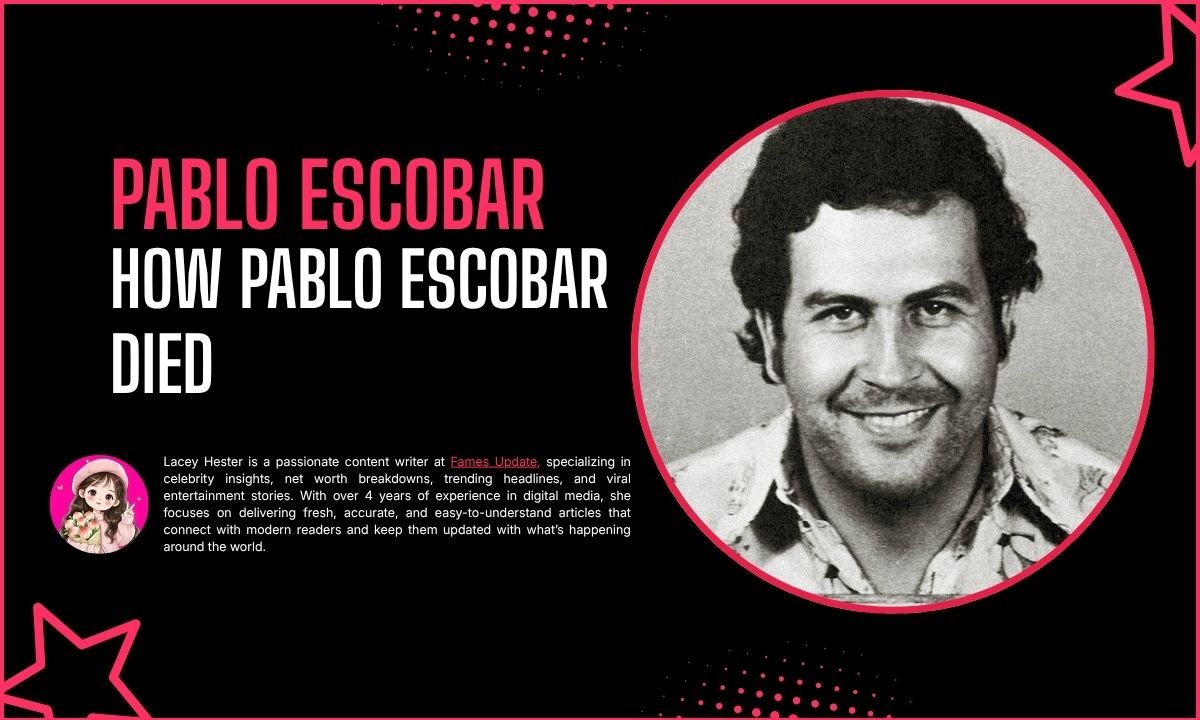
Pablo Escobar died on December 2, 1993, on a rooftop in the Los Olivos neighborhood of Medellín. It was the day after his 44th birthday. He had been hiding in the city with a single bodyguard, while his wife and children were elsewhere under protection.
Investigators tracked him after he made repeated phone calls, including calls to his family. Police radio technology located the house where he was staying. Officers entered, and a gunfight followed. Escobar was found dead on the roof, and the news made headlines around the world.
Who Killed Pablo Escobar?
The official account credits the Colombian National Police Search Bloc, a special unit created to hunt him. American agencies reportedly supplied intelligence and technical support. Los Pepes, a group of enemies including rival traffickers, had also spent months dismantling his network and killing associates.
Public accounts do not identify a single shooter with certainty. Reports describe wounds to his leg and torso, and a fatal wound to the head. Because the evidence has been argued over for decades, it is more accurate to say a police operation killed him than to name one individual.
The Suicide Claim
His son Juan Pablo and others close to him have said Escobar shot himself in the head rather than be captured. They argue he had long said he would never be taken alive. Some of the men who were with him in his final years also supported that version.
Colombian officials have maintained that police gunfire killed him. Forensic details have been debated without producing a conclusive public resolution. The fair reading is that both accounts exist, that the official one has stronger institutional backing, and that the family account remains a significant dissenting claim.
See More: Frank Thorp
Pablo Escobar Wife and Children
Who Was His Wife?
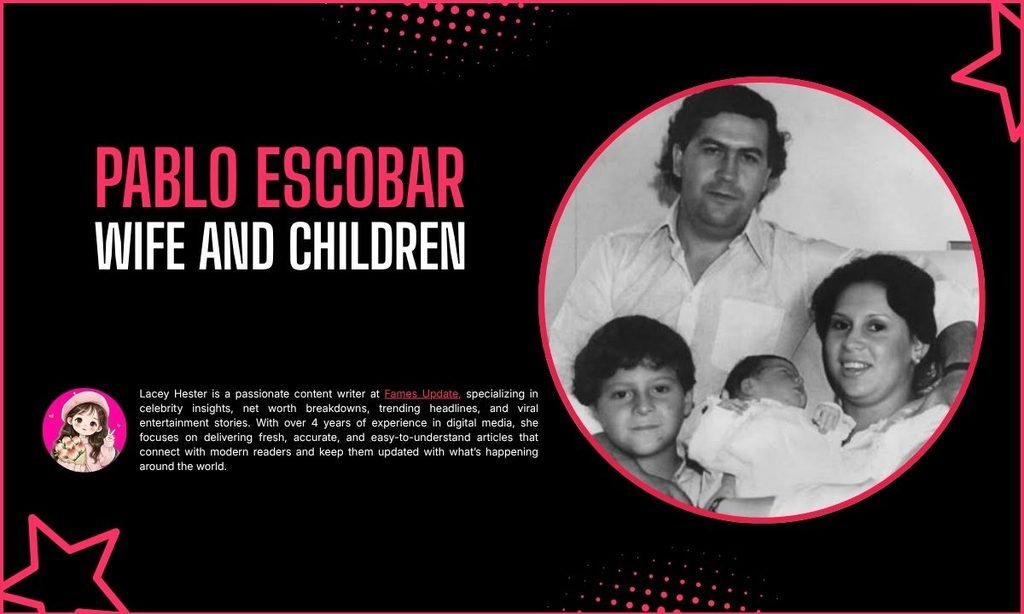
Escobar married María Victoria Henao Vallejo, often called Tata, in 1976, when she was a teenager and he was in his twenties. She lived through years of kidnapping threats, bombings, and flight, and she was a constant presence at the center of the family.
After his death, she left Colombia with her children and sought refuge abroad. They eventually settled in Argentina under new names. She was arrested there in 1999 in a money laundering investigation. Much of her later life has been spent away from the public eye.
His Son, Juan Pablo Escobar
Juan Pablo was born in 1977 and grew up in the middle of his father’s war. After the family moved to Argentina, he took the name Sebastián Marroquín and built a career as an architect and author. He appeared in the 2009 documentary Sins of My Father.
In 2014, he published a book about his father. He has publicly apologized to the families of victims, including the sons of Luis Carlos Galán and Rodrigo Lara Bonilla. He has also said he opposes glorifying his father’s life, which puts him at odds with parts of the Escobar brand.
His Daughter, Manuela
Manuela Escobar was born in 1984 and was a young girl when her father died. She also changed her name and has kept a very low public profile. Unlike her brother, she has not become a public commentator on the family history.
One story often attached to her was recounted by her brother. He has said that while the family was hiding in the mountains, their father burned a large sum of cash to keep her warm. That account comes from Juan Pablo’s recollections and cannot be independently verified.
Virginia Vallejo and Other Reported Relationships
Virginia Vallejo, a Colombian television host and journalist, has said publicly that she had a romantic relationship with Escobar in the 1980s. She described it in her memoir, published in Spanish in 2007 and in English as Loving Pablo, Hating Escobar. The 2017 film Loving Pablo is based on her account.
Her story is the main source for the relationship. She was a known public figure at the time, but there is limited independent documentation of the private details. It is best read as her account, not as a settled historical record, and her memoir includes other claims about powerful Colombians that remain contested.
Reports of additional relationships also circulate online, but credible, documented evidence for them is thin. Nothing in publicly available records establishes that his marriage ended. Readers should treat unsourced affair stories as speculation, and the questions about his private life are still not fully answered.
What Was Pablo Escobar Net Worth?
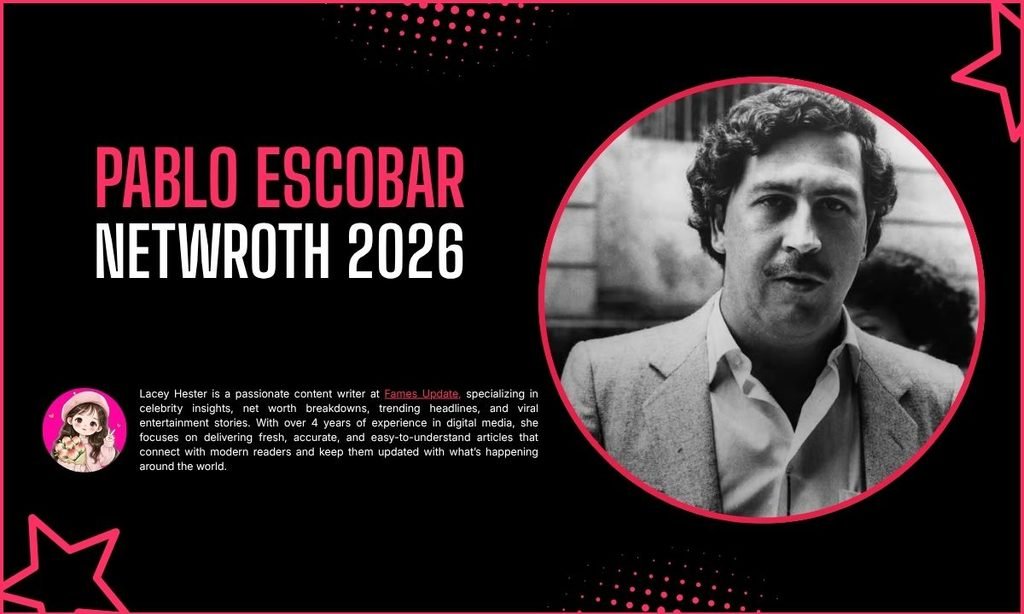
No audited figure exists, because the money came from illegal activity that was never reported or taxed. Estimates rest on cartel testimony, seized assets, and journalism. Forbes first included him in its billionaire rankings in 1987 with a $2 billion estimate, and he stayed on that list for seven consecutive years.
A later figure of $30 billion is repeated across many websites as his peak fortune. That number is widely circulated but is not a Forbes valuation, and other pages cite different totals, such as $25 billion. Because those figures are not traced to a primary listing, they should be read as unverified estimates.
- 1987: Forbes estimated his wealth at about $2 billion
- 1989: Several sources report he ranked among the world’s richest, at seventh
- Widely repeated peak figure: $30 billion, an unaudited estimate
- Reality check: Large parts of his wealth were seized, spent, or lost during the war
The Hippos of Hacienda Nápoles
Escobar built a private zoo at Hacienda Nápoles, his ranch in the Magdalena River valley. He brought four hippos into Colombia in the 1980s. After his death, the government seized the property, and the animals were left behind while other zoo animals were moved elsewhere.
The hippos multiplied. A National University study estimated about 170 hippos in the country in 2022, and some have wandered about 60 miles from the original ranch. Colombia is the only country outside Africa with a wild hippo population, and authorities consider them a danger to villagers and native species.
In April 2026, Environment Minister Irene Vélez indicated that 80 would be culled, without saying when it would start. The minister said earlier efforts such as neutering and moving animals to zoos had been expensive and unsuccessful. Animal protection advocates have condemned the plan, and the debate is ongoing.
The White House Photo
One of the most shared images connected to Escobar shows him standing in front of the White House with his young son. The photograph is generally dated to about 1981 and comes from a family trip to the United States. It has circulated widely because it seems to show a man later labeled public enemy in the heart of American power.
At the time of the visit, Escobar was not yet a household name in the United States. He was a wealthy Colombian businessman and an emerging figure in Medellín politics. His criminal career was already underway, but the open conflict with Colombia and Washington had not yet begun.
His relationship with the United States changed sharply during the 1980s. He later faced multiple American indictments, and extradition became the central issue of his fight with the Colombian state. The photo remains popular because of that contrast between a family snapshot and what came after.
Popeye and the Inner Circle
Jhon Jairo Velásquez Vásquez, known as Popeye, was one of Escobar’s most notorious enforcers. He was a hitman and bodyguard who worked for the cartel for years and later became a public figure because he talked about it. He surrendered in the early 1990s and served more than two decades in prison.
After his release, he gained a following online, including a YouTube channel where he spoke about his past. He claimed responsibility for hundreds of killings. Those numbers come from his own statements and cannot be independently verified, so they should be treated as claims and not as confirmed totals.
Popeye died in February 2020. His life shows how the story of Escobar has been told in part by men who served him, with all the bias that implies. His interviews are valuable as testimony, but they are not neutral evidence, and they should be weighed against court records and journalism.
Names and Search Terms That Cause Confusion
Several searches connected to Escobar involve mistaken names. Juan Pablo Escobar and Sebastián Marroquín are the same person. Gustavo Gaviria was Escobar’s cousin and business partner, not a person called Gustavo Pablo Escobar. Escobar’s brother Roberto has also written about the cartel.
Other phrases appear in search data but do not match a documented person, event, or work that could be verified from reliable sources. Examples include Pablo Pledge Escobar and the song style searches that mix his name with unrelated artists. Search volume alone is not evidence that something exists.
Spanish language searches, such as those for the wife and daughter, point to the same people covered above. His wife is María Victoria Henao and his daughter is Manuela. Most Spanish and English queries lead to the same basic facts, which are well documented in books, courts, and press coverage.
Pablo Escobar in Books, Movies, and Memes
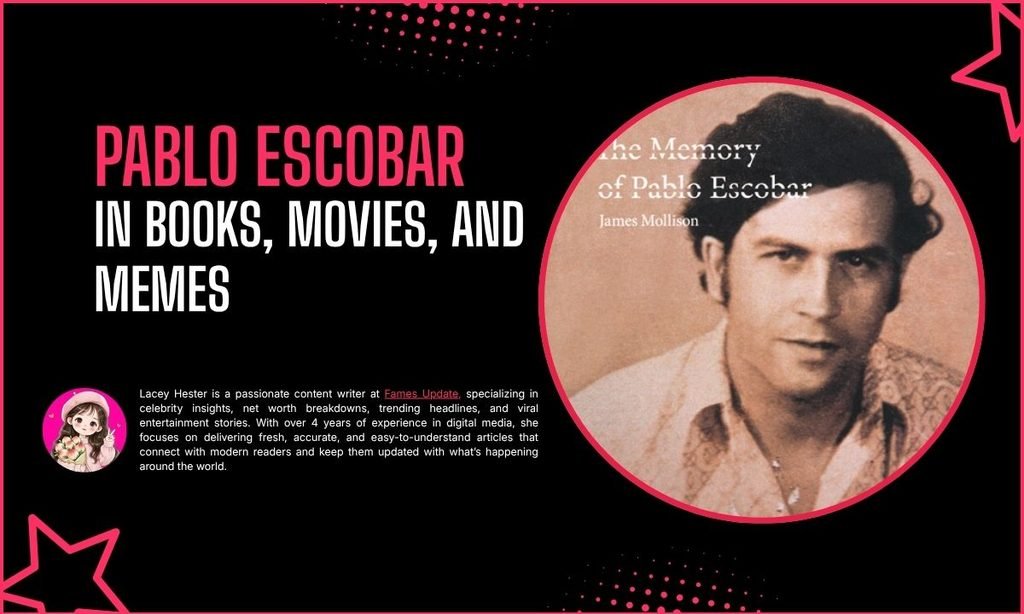
Escobar has been dramatized for more than a decade across film, television, music, and the internet. Some portrayals take a documentary approach, while others are fictionalized. Viewers should treat them as interpretations, since scenes and dialogue are often invented.
The waiting meme comes from a scene in Narcos starring Wagner Moura, and it has far outlived the show. Its popularity shows how a violent historical figure can become a joke detached from context. Many historians and victims’ families object to that kind of casual treatment.
- Narcos (Netflix, 2015): Wagner Moura plays Escobar in the early seasons
- Escobar: Paradise Lost (2014): Benicio del Toro plays him in a fictional story
- Loving Pablo (2017): Javier Bardem plays him, based on Virginia Vallejo’s memoir
- El Patrón del Mal (2012): A Colombian series that dramatizes his life
- Killing Pablo (2001): Mark Bowden’s book on the hunt for Escobar
- Pablo Escobar: My Father: Sebastián Marroquín’s account of life as his son
See More: Karoline Leavitt Net Worth
Frequently Asked Questions
Is Pablo Escobar alive?
No. Pablo Escobar died on December 2, 1993, in Medellín, Colombia. Despite occasional online claims to the contrary, his death was reported at the time and has never been credibly disproved. He would be 76 if he were alive today.
How did Pablo Escobar die?
The official account says he was killed in a police operation on a Medellín rooftop. His family and some associates have said he shot himself instead. The two versions remain a point of dispute.
Who killed Pablo Escobar?
Colombia’s National Police Search Bloc carried out the operation that ended with his death. Americans reportedly helped with intelligence. Which person fired the fatal shot has not been publicly established.
What was Pablo Escobar net worth?
There is no confirmed figure. Forbes listed him with about $2 billion in 1987, and later estimates reach far higher, with $30 billion often repeated but unverified. His wealth also shrank during his final years.
Who was Pablo Escobar wife?
His wife was María Victoria Henao Vallejo, known as Tata. They married in 1976. After his death she lived abroad under a new name and was arrested in Argentina in 1999 in a money laundering investigation.
How many children did Pablo Escobar have?
Family accounts and public records describe two children, a son named Juan Pablo, now Sebastián Marroquín, and a daughter named Manuela. Both changed their names after leaving Colombia.
Why are there hippos in Colombia because of Pablo Escobar?
He imported four hippos for a private zoo at Hacienda Nápoles in the 1980s. After his death, the animals stayed and multiplied. Estimates now put the wild population at around 170 or more, and officials announced a cull of about 80 in April 2026.
How many people did Pablo Escobar kill?
No exact number is known. Estimates run into the thousands for violence tied to his organization, but they are estimates. Claims from former associates such as Popeye are their own statements and are not independently confirmed.
Conclusion
Pablo Escobar’s story is well documented in outline, from his rise in Antioquia and brief political career to the bombings, his surrender, and his death in December 1993. The details most often searched, including his wife, children, and fortune, are often clouded by estimates and family accounts.
The enduring interest in Pablo Escobar comes from the gap between legend and record. His fortune cannot be audited, his death is still contested by his own family, and his hippos continue to shape Colombia’s headlines in 2026. Readers get the clearest picture by separating verified history from claims, estimates, and entertainment.

Lacey Hester is a passionate content writer at Fames Update, specializing in celebrity insights, net worth breakdowns, trending headlines, and viral entertainment stories. With over 4 years of experience in digital media, she focuses on delivering fresh, accurate, and easy-to-understand articles that connect with modern readers and keep them updated with what’s happening around the world.
[…] See More: Pablo Escobar […]
[…] See More: Pablo Escobar […]
[…] See More: Pablo Escobar […]